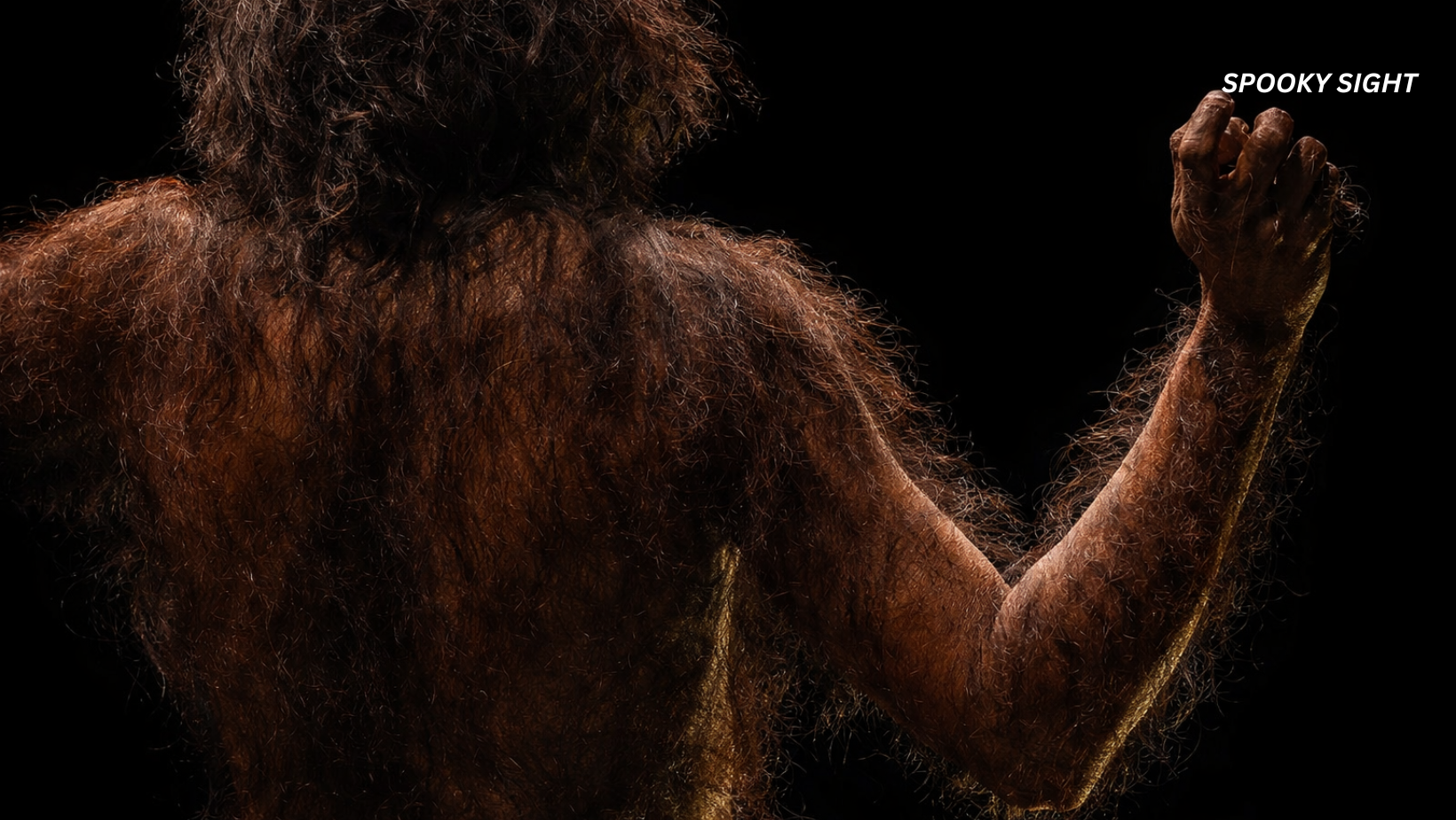
Every morning, millions of people look in the mirror and wonder the same thing: why am I so hairy? From leg shaving to eyebrow threading, laser treatments to regular salon visits, society spends millions every year managing body hair. But according to scientists, the real question we should be asking is the opposite: why don’t we have more of it?
Humans are one of the hairless members of the primate world, a trait that has puzzled evolutionary biologists for decades. Why did our ancestors shed most of their fur while other primates remained fully covered? Researchers have proposed numerous ideas. Maybe humans spent time in shallow waters, making fur less useful. Perhaps bare skin helped our ancestors sweat efficiently while hunting in hot climates. Some scientists even suggest it made social communication easier, allowing us to read blushing faces or other emotional signals. While no single explanation has been confirmed, recent research is beginning to uncover the molecular and genetic mechanisms behind hair growth and hair loss, giving us a closer look at how humans became the “naked apes.”
Related article: Moss Has Just Survived a Full Year Outside the International Space Station
How Hair Patterns Are Controlled
Sarah Millar, a dermatology professor at the University of Pennsylvania, co-led a recent study that sheds light on the genetics behind human hair patterns. She explains that scientists are still puzzled about why hair appears differently across our bodies. “We have long hair on our scalps, shorter hair elsewhere, and no hair at all on our palms, the soles of our feet, or the undersides of our wrists,” Millar says. “We really don’t understand how these differences happen.”
Looking at other mammals for clues, scientists noticed that some areas of the body are naturally hairless. For instance, the underside of a rabbit’s paw has little fur compared to the rest of its body. Researchers studying this area discovered a protein called Dickkopf 2, or Dkk2, that seems to block hair growth. Where Dkk2 levels are high, hair struggles to grow. In mice, the plantar skin—the area equivalent to human feet—remained hairless due to high levels of this protein. Mice genetically modified to lack Dkk2 grew hair in these normally bald areas, confirming the protein’s role in controlling hair distribution.
Millar notes that Dkk2 is just part of the story. The hair that appeared on the modified mice was thinner, shorter, and less evenly spaced than regular fur. “Dkk2 can stop hair growth, but it isn’t the only factor. There’s still much to explore,” she says.
Understanding how hair growth is blocked could have practical applications. Baldness, for instance, might be influenced by the same pathways. Other skin conditions, including psoriasis or vitiligo, could also be better understood by studying how Dkk2 and similar proteins work. These discoveries could eventually lead to therapies that manipulate hair growth safely or treat skin disorders that affect millions worldwide.
Why Humans Lost Most of Their Fur
Even with the molecular details emerging, the big question remains: why did humans evolve to be mostly hairless? Some answers are surprisingly practical. Hairless palms and soles may have helped early humans use tools more efficiently or grip objects without interference from hair. Beyond these areas, however, the reason for losing our body hair has been debated for decades.
One idea, called the aquatic ape theory, suggests that our ancestors spent part of their lives wading in water, gathering aquatic food during dry seasons. Fur would have been less useful in these conditions, while a layer of fat could help with insulation. Some proponents even argue that standing upright, or walking on two legs, may have evolved to aid wading. However, this theory lacks strong fossil evidence and is not widely accepted among scientists.
Related article:This Strange Vampire Squid Isn’t A Monster, But Has Some Of the Most Incredible DNA on Earth
A more widely supported explanation focuses on thermoregulation. As humans moved from shaded forests to open savannahs, losing fur may have helped them stay cool under the hot sun. Sweating became a powerful cooling mechanism, allowing early humans to hunt and travel during the day without overheating. Humans have far more sweat glands than other primates, a trait that helps regulate body temperature efficiently. Fire and clothing later complemented this adaptation, keeping people warm when needed.
Evolutionary scientist Mark Pagel suggests another factor: parasite control. Hairlessness may have made it harder for lice and other parasites to survive, giving hairless individuals a survival advantage. Humans retained some hair in strategic areas—on the scalp to protect from the sun and in the pubic region to retain pheromones. Over time, hairless skin may have become a signal of health, turning a smooth body into a sign of a strong, parasite-free mate.
Hair and Emotional Communication
Another fascinating theory links hairlessness to emotional communication. Mark Changizi, an evolutionary neurobiologist, believes that our ability to detect subtle color changes in the skin influenced the evolution of hairlessness. Humans have three types of color receptors in the eyes, allowing us to see shades other animals cannot. This ability helps us notice health or emotional cues, like a baby’s skin turning blue or green, a flush indicating anger, or a blush suggesting attraction. For these signals to be visible, less hair on the face and body may have been essential.
Changizi’s research shows a correlation between hairless faces and advanced color vision in primates. Species with bare faces often have three color receptors like humans, while furry-faced species typically have only two. This suggests that seeing color changes and losing hair may have evolved together. Facial expressions, emotional signals, and social bonding may all have been enhanced by the loss of hair on critical areas of the body.
What We Learned from Fossils
Looking back at human ancestors also provides clues. Fossils like Australopithecus afarensis, which lived 3 to 4 million years ago, show evidence of upright walking and tool use. While scientists cannot directly observe their hair, skeletal evidence suggests adaptations consistent with heat management and increased activity in open landscapes. This supports theories that hair loss may have been a combination of practical survival needs, like thermoregulation and parasite control, rather than a single factor.
Beyond Survival: Evolutionary Benefits
The loss of fur may also have shaped human culture and aesthetics. Hairless skin allows for better display of fitness and health, influencing mate selection. It could have encouraged more social bonding and cooperative behavior, as emotional signals became easier to read. The hair we do keep, like the hair on our heads, protects us from UV radiation, while pubic and underarm hair retains pheromones that may have helped early humans identify suitable mates.

Related article: 3I/Atlas Shows A Strange Protrusion As It Speeds Toward Earth
The Future of Hair Research
Millar admits that her research will not immediately settle the debate about why humans are hairless. However, combining insights into the genetics of hair growth with observations of human anatomy brings us closer to understanding this defining trait. Beyond evolutionary curiosity, this research has real-world applications. By understanding how hair growth is regulated, scientists could develop treatments for baldness, improve therapies for skin disorders, or even unlock ways to manipulate hair growth safely.
Humans may have lost their fur millions of years ago, but the story of hair is far from finished. By studying the molecules, genes, and evolutionary pressures that shaped our bodies, scientists are uncovering a tale that is part survival, part social strategy, and part biology. One day, these discoveries may help us not just understand our past, but also manage the hair on our heads and bodies more intelligently than ever before.
Featured image: GPT recreation.
Friendly Note: Spookysight.com shares general information for curious minds. Please fact-check all claims. 🌱