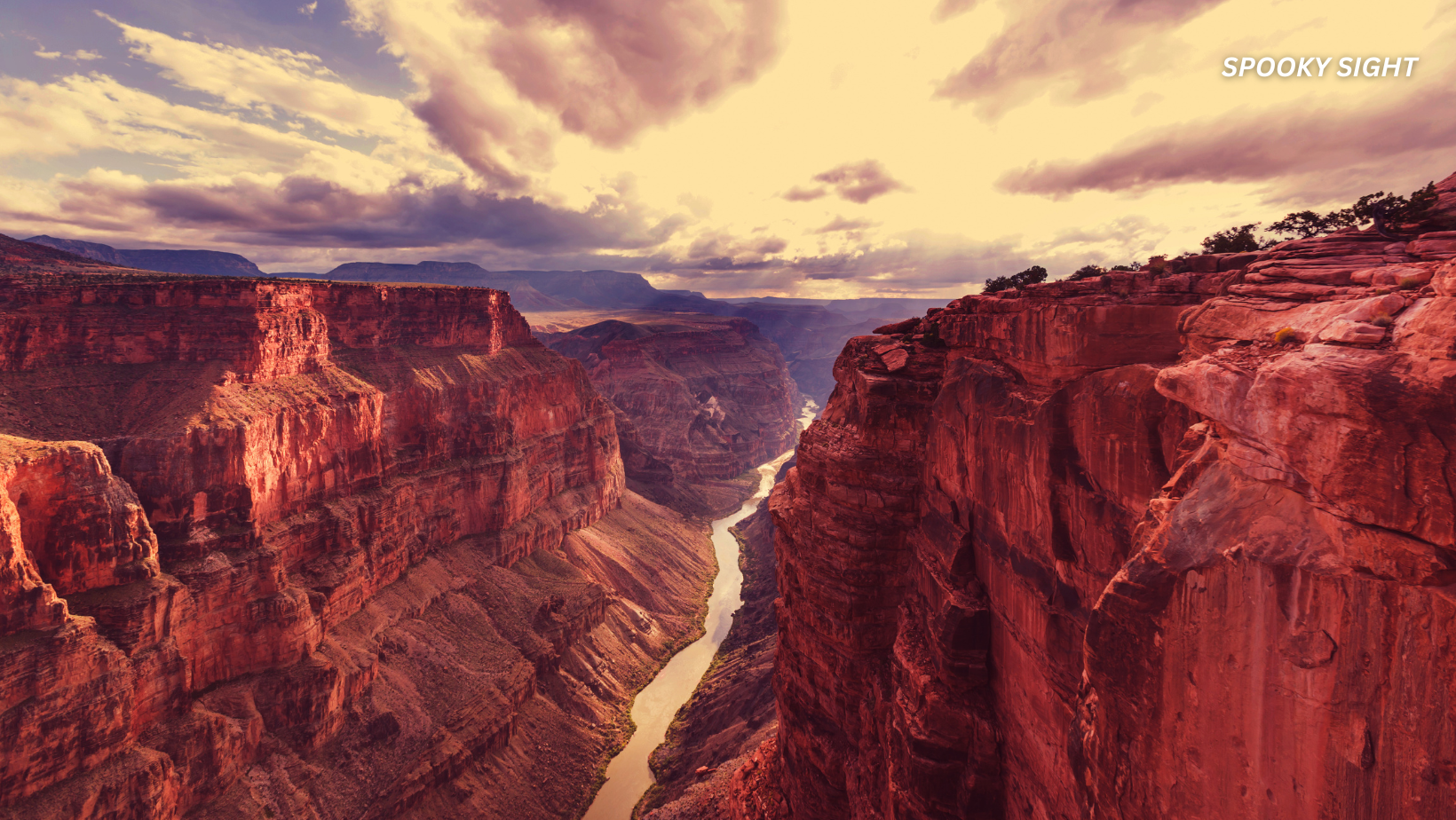
Death Valley National Park is a land of extremes. Known as the hottest place on Earth, it also ranks as the driest and lowest point in North America. Stretching across California and Nevada, its vast landscapes include jagged mountains, salt flats, sand dunes, and deep canyons. Yet, among all these remarkable features, one mystery stands out: rocks that move across a flat desert floor, leaving long trails behind them as if propelled by unseen hands.
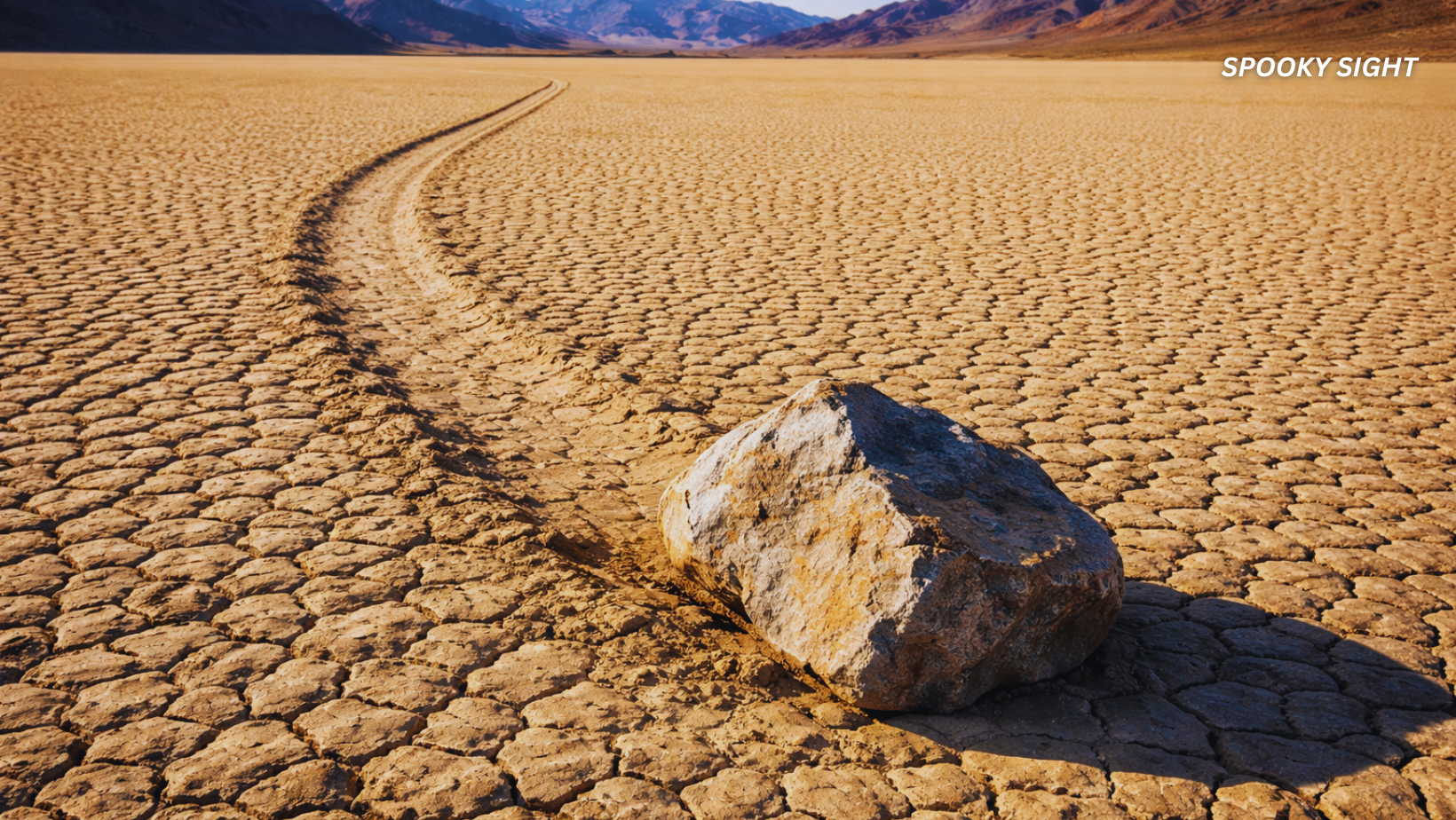
This phenomenon occurs at Racetrack Playa, a dry, flat lakebed in the remote western part of the park. Here, rocks of various sizes appear to glide slowly across the hardened clay, creating winding or straight trails that record their mysterious journey. For decades, the “sailing stones” baffled scientists, explorers, and visitors alike, inspiring theories ranging from wind and ice to more imaginative explanations.
What Makes Racetrack Playa So Special?
Racetrack Playa is not just another flat area in the desert. The playa is approximately 2.8 miles long and 1.3 miles wide, creating a smooth, nearly perfect natural canvas. Its surface is composed of dried clay that cracks into polygonal patterns, making it easy to spot changes over time. When the rare rains come, the shallow water that collects on the playa forms temporary ponds. These ponds can freeze overnight during the cold winter months, creating an unusual set of conditions necessary for the rocks to move.
The environment of Racetrack Playa is extreme yet delicate. The flat surface makes even slight movement visible, while the arid climate preserves the trails for months or years. Its remoteness also means that only determined visitors or researchers witness the area, which adds to the mystique surrounding the sailing stones.

Related article: Moss Has Just Survived a Full Year Outside the International Space Station
The Sailing Stones: A Natural Wonder
The rocks on Racetrack Playa vary dramatically in size and shape. Some are small enough to pick up with one hand, while others weigh hundreds of pounds. Despite their heavy weight, these stones seem to slide effortlessly across the flat ground, leaving trails that can stretch over a thousand feet.
Interestingly, the type of rock affects its path. Stones with rough or irregular bottoms tend to leave straighter lines, while smoother stones wander in curves, creating meandering trails that resemble brush strokes across a natural canvas. Each trail is a unique record of that stone’s journey, shaped by weather, surface conditions, and the subtle forces of nature.
Early Theories and Scientific Curiosity
For many decades, scientists could only observe the results of the rocks’ movements, not the movement itself. Theories abounded. Some suggested that strong winds were capable of pushing the stones across the clay. Others imagined more exotic causes, including magnetic fields or even extraterrestrial involvement. While intriguing, none of these explanations could fully account for how the heaviest stones moved.
Researchers documented the stones, measured their paths, and studied the clay beneath them. They noted that the trails were not random; some ran perfectly straight, while others curved gently before abruptly changing direction. Such complexity suggested that a combination of factors, rather than a single force, was at work. Yet, for decades, the true mechanism remained a mystery.
The 2014 Breakthrough: Ice, Water, and Wind
The puzzle of the sailing stones was finally solved in 2014. Scientists used time-lapse photography, GPS trackers, and careful observation to capture the movement in real time. What they discovered was unexpectedly simple yet elegant.
The movement happens during rare winter conditions. Rainwater collects on the playa, forming shallow ponds that freeze overnight. During the day, sunlight partially melts the ice, turning it into thin sheets only a few millimeters thick. Light winds push these ice sheets, which in turn gently nudge the rocks forward. The combination of ice, water, and wind allows even the largest stones to slide slowly across the clay surface.
Once the water evaporates and the playa dries, the rocks stop, leaving behind trails that can last for months or years. These trails are preserved because the desert climate rarely disrupts them, making each line a lasting record of the stones’ journey.
Related article: This Strange Vampire Squid Isn’t A Monster, But Has Some Of the Most Incredible DNA on Earth
Why the Sailing Stones Captivate the Imagination
Even with the scientific explanation, the sailing stones continue to fascinate. They show that nature’s wonders do not always require grand gestures or dramatic displays. Sometimes, the most astonishing phenomena happen gradually and slowly, visible only to those who observe carefully and patiently.
The movement of the rocks also demonstrates the delicate balance of environmental conditions. Ice sheets, thin clay, and light winds must align perfectly for movement to occur. This rare combination explains why sightings of actual moving stones are so uncommon. Most of the time, the rocks rest silently, their trails subtly telling the story of past motion.
The sailing stones invite reflection, curiosity, and even a touch of awe. They remind us that the world still contains mysteries that challenge our assumptions, blending science and wonder in a uniquely poetic way.
Visiting Racetrack Playa
For adventurous travelers, seeing Racetrack Playa is a unique experience. The site is reachable via a 2-mile drive south from the Grandstand parking area, followed by a half-mile walk toward the southeast corner of the playa. While the rocks’ positions change slowly over time, visitors can typically find the most interesting formations by exploring this section.
Visitors are strongly urged not to disturb the rocks or their trails. The playa’s clay surface is fragile, and footprints can last for years. Driving off established roads is prohibited, and extra caution is needed after rain when the surface becomes muddy. Respecting these rules ensures that future generations can continue to marvel at the sailing stones.
Beyond the rocks themselves, the playa offers stunning scenery. From the surrounding mountains to the expansive flat clay surface, the area is a photographer’s dream. Sunrises and sunsets transform the landscape, casting long shadows across the trails and changing the color of the stones and clay, making each visit unique.

Related article: Scientists Confirm Existence of Massive Underground Tunnels on Venus
A Reminder of Nature’s Subtle Power
The sailing stones of Racetrack Playa are more than just a curiosity. They are a reminder that nature can operate in quiet, elegant ways. While the forces at work are subtle, their effects are profound, leaving evidence of motion where no motion seems possible.
Death Valley National Park, with its extreme conditions and dramatic landscapes, continues to captivate scientists, adventurers, and dreamers alike. The sailing stones serve as a symbol of the hidden processes that shape our world, offering a glimpse into the extraordinary mechanisms that exist in the most unlikely places.
Visiting Racetrack Playa is more than just witnessing a natural oddity—it’s a chance to step into a landscape where patience, observation, and curiosity are rewarded. Even when the rocks are still, their trails speak volumes, telling stories of ice, wind, and time.
In the end, the sliding rocks remind us that sometimes the greatest wonders are the quietest ones, and the desert still holds secrets that continue to inspire awe and curiosity.
Featured image: GPT Recreation for Illustration.
Friendly Note: Spookysight.com shares general information for curious minds. Please fact-check all claims. 🌱