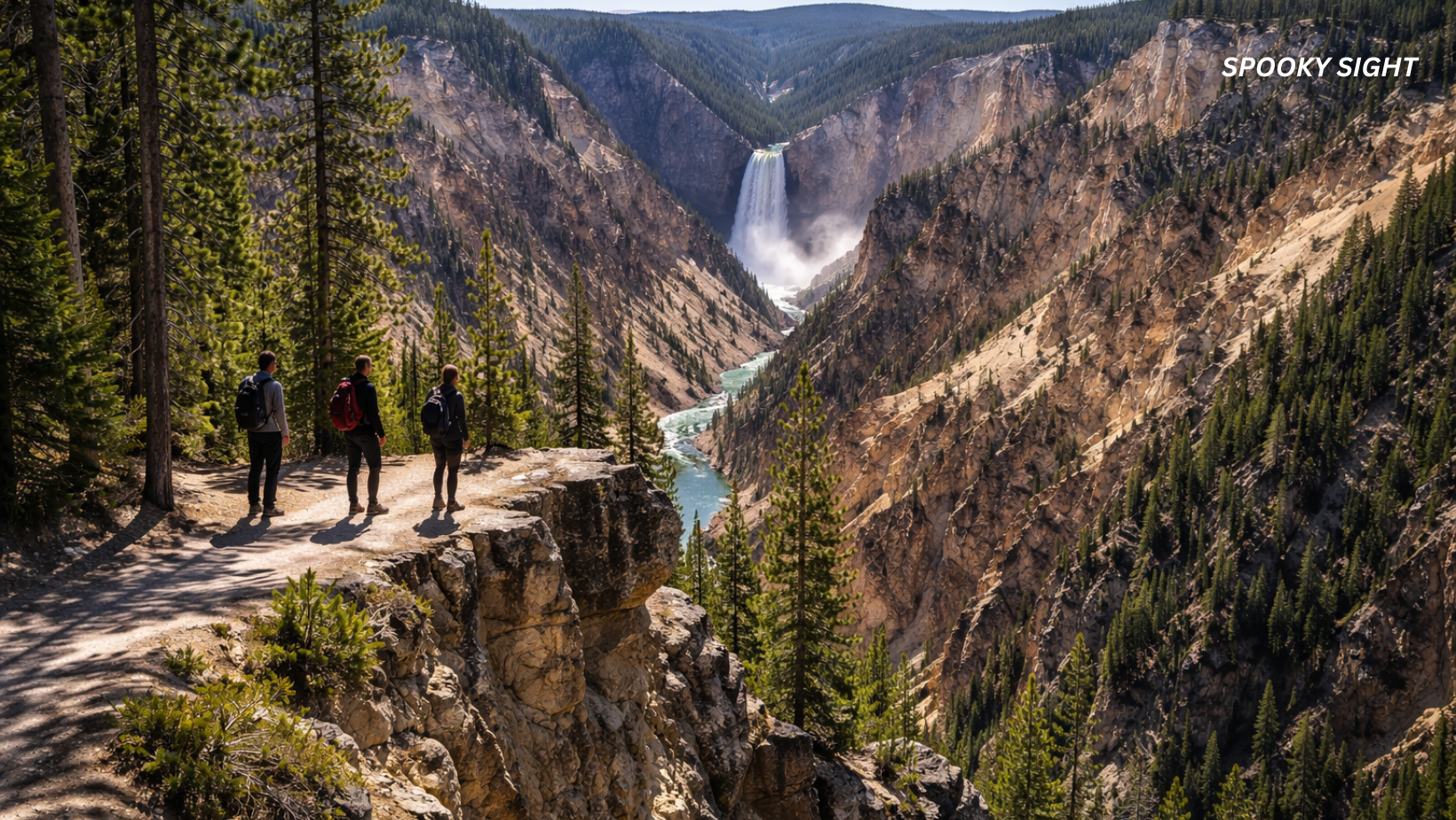
Beneath the forests, geysers, and winding boardwalks of Yellowstone National Park, the ground is slowly changing once again. Scientists have identified a large rise along the northern edge of the Yellowstone caldera, an underground movement that spans an area comparable to a major American city. While the discovery may sound dramatic, researchers emphasize that this change is neither sudden nor dangerous. Instead, it reflects the natural and ongoing activity of one of the world’s most studied volcanic systems.
The uplift is located near the park’s north rim, close to the Norris Geyser Basin, a region known for its restless geothermal features. The movement was not noticed by hikers or park staff because it is far too subtle to see. It was revealed only through precise scientific instruments designed to detect even the smallest shifts in the Earth’s surface.
What Volcanic Uplift Really Means
Geologists refer to this type of movement as volcanic uplift. It occurs when magma, hot water, or pressurized gases move beneath the surface, gently pushing the land upward. Unlike earthquakes or eruptions, uplift is a slow and gradual process. It does not break the ground or release lava. Instead, it causes the surface to rise by small amounts over large areas.
In volcanic regions like Yellowstone, uplift is considered normal behavior. The park sits atop a vast network of underground heat and molten rock, which constantly shifts as energy moves through the system. These movements help explain why geysers erupt, why hot springs stay warm, and why the landscape is always subtly evolving.

Related article:Scientists Have Finally Explained How the Sliding Rocks of Death Valley Move Around On Their Own
A Familiar Pattern Returns After Two Decades
This is not the first time scientists have seen this kind of activity in the area. In 1996, researchers detected a similar rise near the Norris Geyser Basin. That earlier event became known as the Norris Uplift Anomaly. Over several years, the ground slowly rose and then gradually sank back down. By 2004, the uplift had faded, leaving no visible trace behind.
For more than a decade afterward, the region remained relatively quiet. Then, in July 2025, monitoring stations began recording subtle changes once again. The uplift had returned, following a familiar geological pattern that scientists had seen before.
A City Sized Area With an Almost Invisible Rise
What makes the current uplift stand out is its sheer size. Measurements show that the raised area stretches roughly 19 miles across, making it comparable to a city like Chicago. Despite covering such a wide area, the actual amount of vertical movement is surprisingly small.
Since the uplift began, the ground has risen by less than an inch. This tiny change explains why visitors walking through the park would never notice anything unusual. Trails remain level, geysers behave normally, and the landscape appears unchanged.
To detect this movement, scientists rely on GPS stations anchored deep into the ground and satellite radar systems that can measure shifts as small as a few millimeters. These tools allow researchers to observe Yellowstone’s surface rising and falling in slow motion, almost like the gentle breathing of the Earth.
Why “Subtle” Is the Right Word
Describing a city sized deformation as subtle may seem odd at first. However, in geology, subtle refers to the speed and scale of the movement rather than the area involved. Compared to the dramatic ground changes that often precede volcanic eruptions elsewhere in the world, Yellowstone’s current uplift is mild and slow.
The ground rose by about two centimeters over several months, a rate that is considered low for an active volcanic system. This slow pace is one of the key reasons scientists are not concerned about immediate hazards.
Does This Mean Yellowstone Is About to Erupt?
Whenever Yellowstone shows signs of underground movement, the same question tends to surface. Is the supervolcano waking up?
According to scientists at the Yellowstone Volcano Observatory, the answer is no. The current uplift is not a warning sign of an impending eruption or any other dangerous event. Instead, it reflects Yellowstone’s ongoing internal activity, which has been occurring for hundreds of thousands of years.
Yellowstone is one of the most closely monitored volcanic regions on Earth. Hundreds of instruments track earthquakes, gas emissions, ground movement, and heat flow around the clock. If serious volcanic activity were developing, scientists would see clear warning signs long before it became dangerous.
Related article: Dark Empathy Could Be the Most Underrated Human Superpower
How Scientists Know There Is No Immediate Threat
Large volcanic eruptions are usually preceded by strong and obvious signals. These include rapid ground deformation, intense earthquake swarms, and dramatic changes in gas output. None of these patterns are currently present at Yellowstone.
The existing uplift is minor compared to deformation seen at other caldera systems worldwide. Before any hazardous activity could occur, the rate of ground movement would increase dramatically. Such changes would be easily detected by Yellowstone’s extensive monitoring network, likely years or even decades in advance.
This level of surveillance allows scientists to distinguish between routine volcanic behavior and genuine warning signs.
Why Yellowstone Is Not “Overdue”
According to the United States Geological Survey, most volcanoes that produce massive eruptions do so only once. Yellowstone’s largest eruption occurred about 2.1 million years ago. The eruption that formed the current caldera happened roughly 630,000 years ago.
Since then, the park has experienced many smaller eruptions, lava flows, and continuous geothermal activity. These events are far more common than supereruptions and play a major role in shaping Yellowstone’s landscape.
There is no scientific evidence suggesting that another supereruption is inevitable or approaching.
What Scientists Mean by a Supervolcano
A supervolcano is defined as a volcanic system that has produced an eruption ranked at level eight on the Volcano Explosivity Index. This scale measures how much material is released during an eruption. A level eight event involves more than 1,000 cubic kilometers of ash, lava, and rock, enough to affect climate and landscapes across vast regions.
Yellowstone qualifies under this definition because of its ancient eruptive history. However, scientists caution that the label can be misleading. Most of Yellowstone’s eruptions have been much smaller and far less explosive. These quieter events make up the majority of its geological story.

Related article:Moss Has Just Survived a Full Year Outside the International Space Station
A Living Landscape, Not a Looming Disaster
The current uplift along Yellowstone’s northern rim fits neatly into this long history of gradual change. It represents the slow movement of heat and material beneath the surface rather than the buildup to a massive explosion.
For scientists, this city sized rise offers valuable insight into the hidden processes shaping the park from below. For visitors, it is a reminder that Yellowstone is alive and dynamic, even when everything above ground appears calm.
Yellowstone is not a ticking time bomb. It is a complex and ever changing geological system, steadily evolving beneath one of the most iconic landscapes on Earth.
Featured image: GPT Recreation for Illustration.
Friendly Note: Spookysight.com shares general information for curious minds. Please fact-check all claims. 🌱