For decades, Mars has been seen as a cold, dusty world where life, if it ever existed, was likely microscopic. Rovers sent by NASA have spent years studying the planet’s surface, searching for chemical traces and fossilized hints of ancient microbes. These missions have transformed what is known about the Red Planet, revealing evidence of water in its past and complex geological processes.
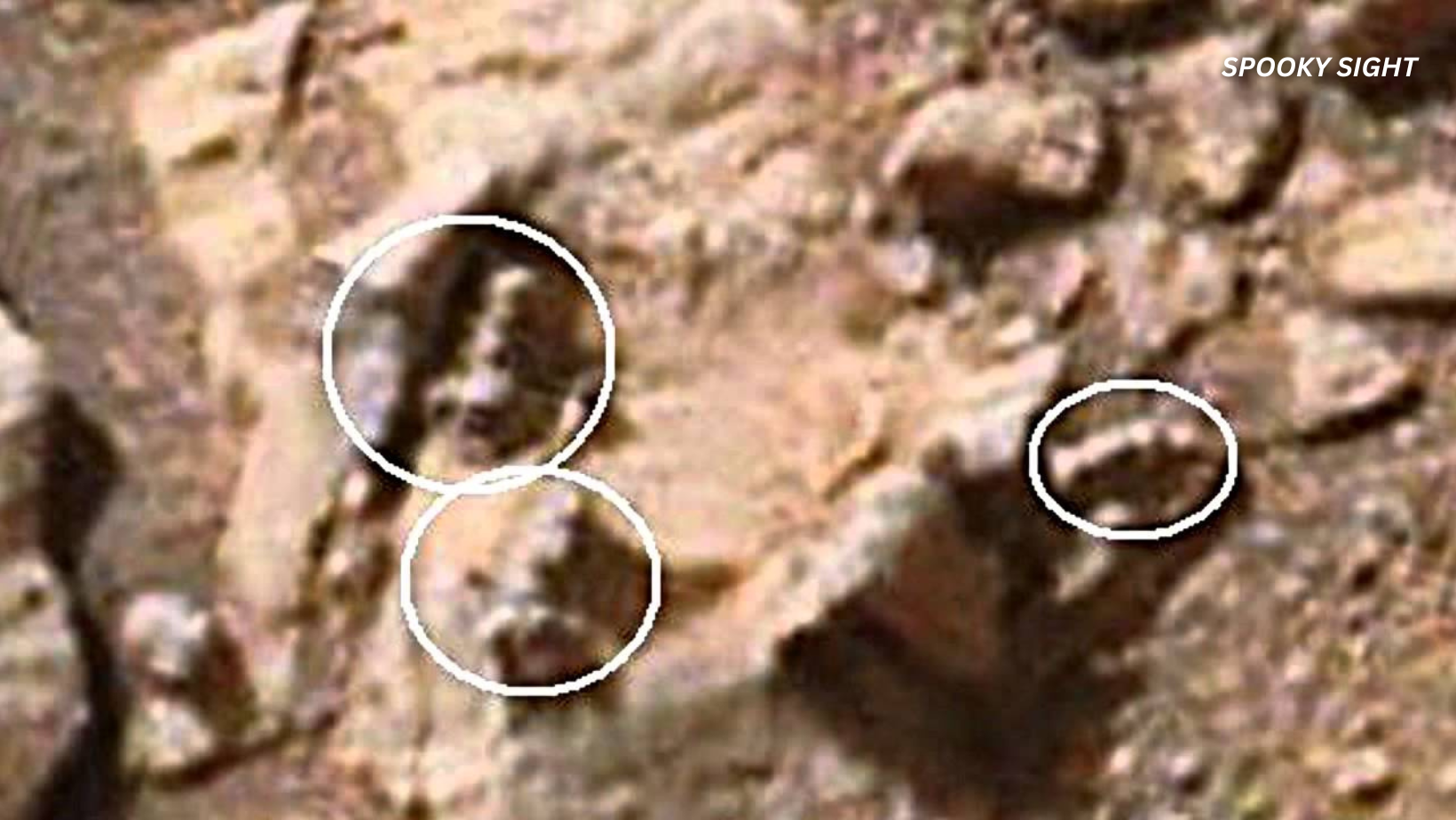
Now, a different kind of claim has entered the conversation. It does not focus on microbes or chemical traces, but on shapes seen in rover images that appear to resemble living creatures. The idea has stirred curiosity, debate, and a fair amount of skepticism.
At the center of this discussion is Professor William Romoser from Ohio University. After studying images taken by NASA’s Curiosity rover, he suggested that some features visible in the photographs may look similar to insects and reptiles found on Earth. His interpretation has sparked renewed interest in how Mars images are analyzed and how easily the human eye can find familiar patterns in unfamiliar places.

Read more: Scientists Just Measured the Shortest Unit of Time Ever — a Zeptosecond
A Different Way of Looking at Mars
Most scientific efforts aimed at finding life on Mars have focused on very small evidence. Researchers typically search for signs such as organic molecules, fossilized microbes, or chemical reactions that hint at past biological activity. These approaches rely on laboratory analysis and strict scientific methods.
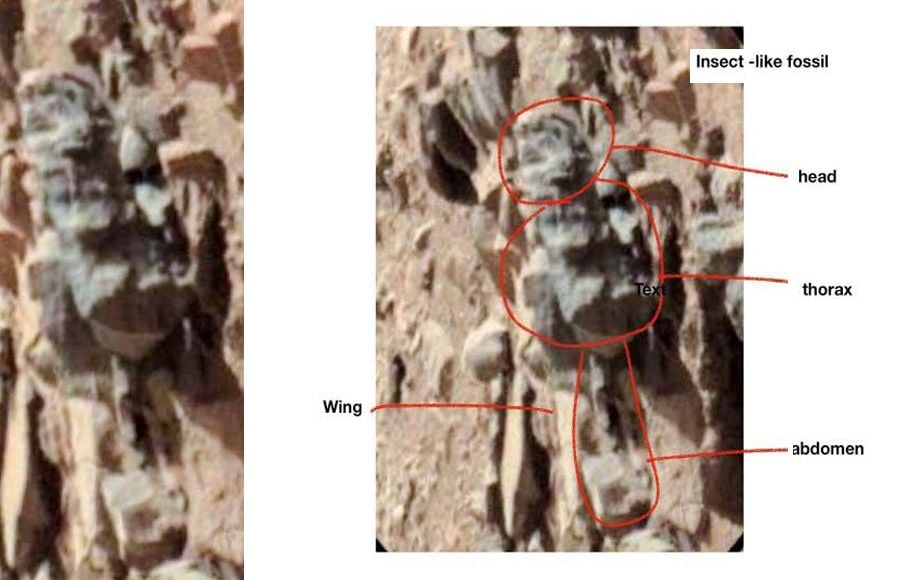
Romoser’s approach stands apart because it focuses on visual interpretation. Instead of chemical signatures, he examined photographs captured by the Curiosity rover and looked for shapes that resemble known biological forms.
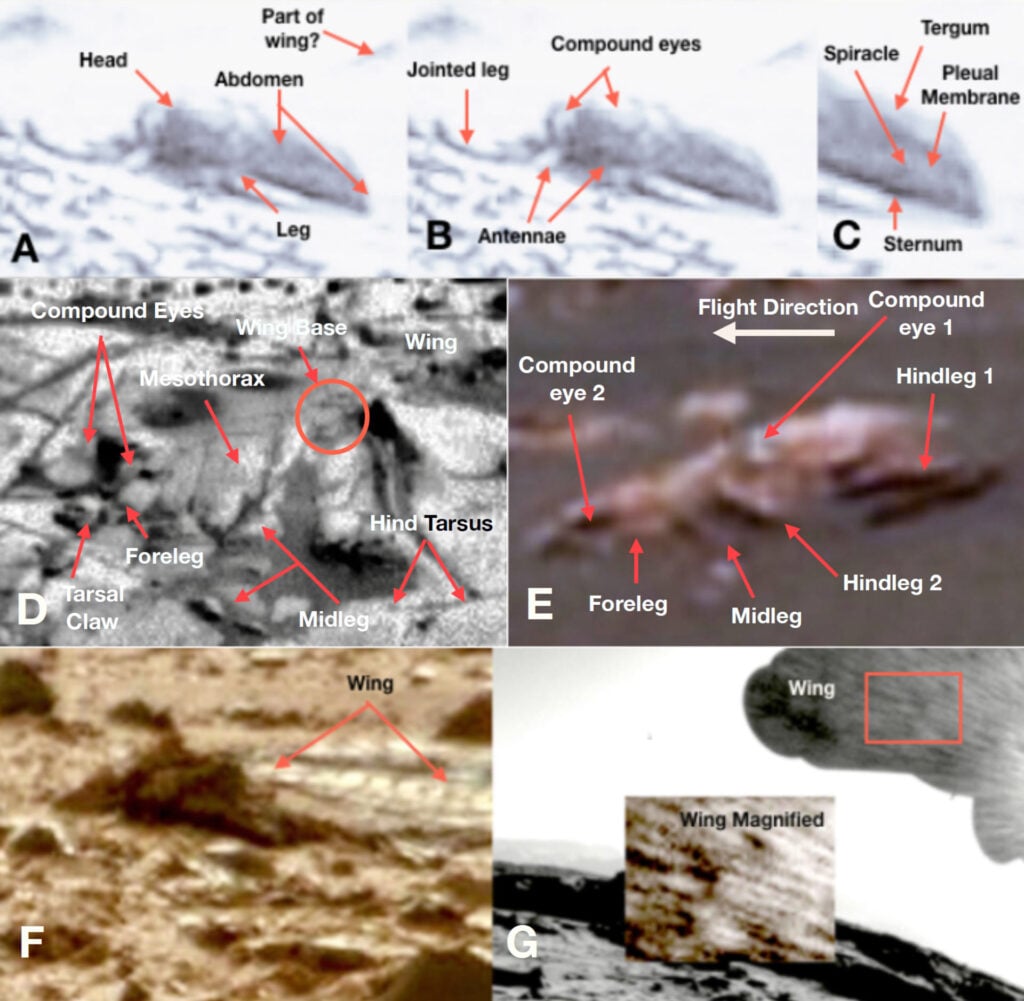
According to his observations, some of these shapes appear to have features similar to insects. These include body segments, wing-like structures, and appendages that seem jointed. In certain images, the shapes even appear positioned in ways that resemble movement or flight.
He described these possible organisms as varying in size and structure, with different features appearing across multiple images. Rather than identifying a single clear specimen, his interpretation suggests a collection of forms that, when viewed together, resemble aspects of arthropods, a large group of animals that includes insects and spiders.
The “Insect Like” Shapes in Rover Images
Some of the most attention-grabbing claims involve what Romoser described as insect-like forms. In a few images, small shapes appear to have wing-like extensions and segmented bodies. One image, in particular, has been interpreted as showing a form that looks as if it is diving and then leveling out, similar to how flying insects move on Earth.
Other images seem to show these shapes resting on the ground or clustered in areas that could be interpreted as shelter. Based on these patterns, Romoser suggested that such forms might be using caves, burrows, or surface features as protective spaces.
He also pointed out structures that resemble compound eyes and specialized limbs. On Earth, these features are commonly associated with insects and other arthropods, which have evolved complex body plans over millions of years.
However, it is important to understand that these interpretations rely heavily on visual similarity rather than physical evidence. No direct biological samples have been collected from Mars that confirm the presence of such organisms.
Read more: Man Claims To Communicate With Non-Human Intelligence, And What They Told Him Proves God’s Existence
Claims of Reptile Like Forms
In addition to insect-like shapes, Romoser also identified patterns in rover images that he believes resemble reptiles. One example includes a formation that appears to have a head-like structure and a body shape similar to a snake.
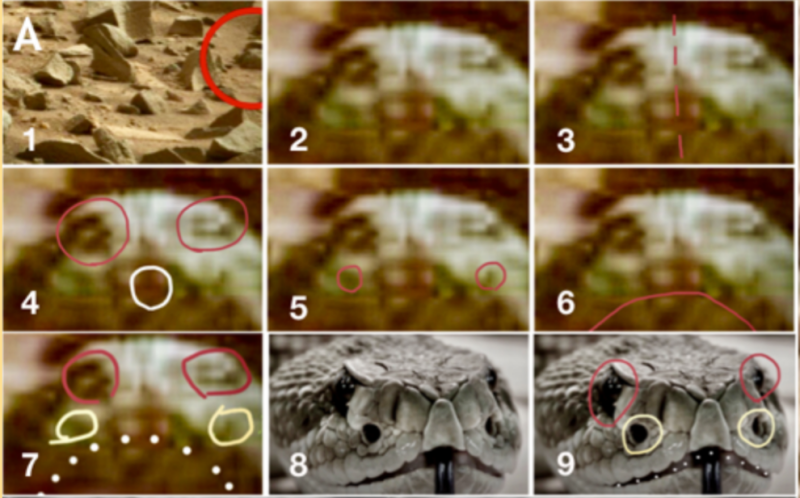
He compared one of these forms to an Eastern King Snake, noting what he described as a distinct head and symmetrical body features. The image appears to show a long, curved shape with what could be interpreted as a mouth.
In some cases, these shapes are positioned in ways that suggest interaction, with one form appearing close to another. This has led to speculation that predator and prey relationships might exist in these interpretations.
Yet again, these ideas are based on visual resemblance rather than confirmed biological evidence. The images themselves do not provide proof of living organisms, but they do offer patterns that can be interpreted in different ways depending on perspective.
Why the Human Brain Sees Familiar Shapes
One reason these interpretations have gained attention is because they tap into a well known psychological phenomenon. The human brain is naturally wired to recognize patterns, especially those that resemble familiar objects or living things.
This tendency is known as pareidolia. It explains why people often see faces in clouds, animals in rock formations, or shapes in shadows. When viewing complex images like those from Mars, which contain rocks, dust, and unusual textures, the brain may try to make sense of random patterns by linking them to known forms.
Because of this, scientists approach such claims with caution. Visual resemblance alone is not considered strong evidence of life. Instead, scientific confirmation requires repeatable data, physical samples, and measurable biological markers.
Could Mars Support Complex Life
Even though these claims remain unproven, they raise an interesting question about what kinds of life could exist beyond Earth.
Mars today is a harsh environment. It has a thin atmosphere, extreme temperatures, and high levels of radiation. These conditions make it difficult for complex life to survive on the surface.
However, scientists believe that Mars once had a warmer and wetter climate. Evidence suggests that rivers, lakes, and possibly oceans existed billions of years ago. If life ever developed during that time, it may have been simple and microscopic.
Some researchers also consider the possibility that life could exist below the surface, where conditions might be more stable. Underground environments could offer protection from radiation and temperature extremes.
Even so, the idea of insect or reptile-like creatures living on Mars today remains highly speculative.
The Bigger Picture
The images captured by NASA’s rovers remain valuable scientific resources. They provide detailed views of Mars and help researchers understand its geology, climate history, and potential for life.
At the same time, they also remind us of how easily the human mind can interpret patterns in unexpected ways. What looks like an insect or reptile at first glance may turn out to be a rock shaped by millions of years of natural processes.
Still, discussions like these keep public interest alive and encourage people to think more deeply about space exploration. Even when claims are debated or challenged, they contribute to a broader conversation about humanity’s place in the universe.

Read more: Scientists Say the Universe Is Set Up With Impossible Precision, And It Doesn’t Make Any Sense
A Story Still Unfolding
The search for life on Mars is far from over. Future missions aim to bring samples back to Earth, where they can be studied with advanced technology. These efforts may finally provide clear answers about whether life ever existed on the Red Planet.
For now, the idea of insect or reptile-like creatures on Mars remains an intriguing but unconfirmed possibility. It sits at the intersection of imagination and science, where curiosity continues to drive exploration.
As new data emerges, the story of Mars will keep evolving. Whether it reveals signs of life or deepens the mystery, one thing is certain. The Red Planet still has many secrets waiting to be uncovered.
Featured image: Freepik.
Friendly Note: Spookysight.com shares general information for curious minds. Please fact-check all claims. 🌱