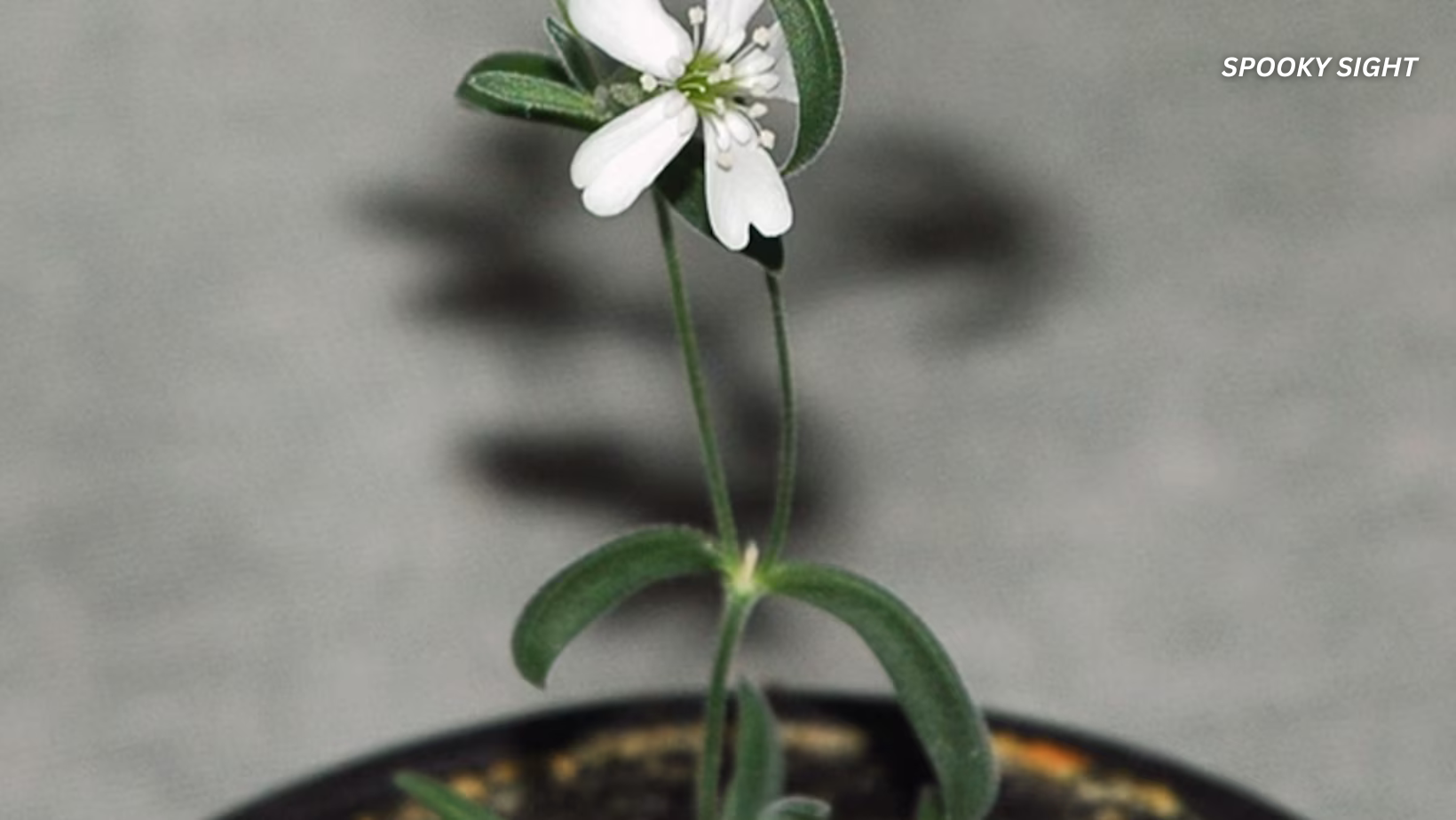
More than thirty thousand years ago, during the last Ice Age, a small squirrel buried food in the frozen ground of what is now northeastern Siberia. The animal likely never imagined that its simple act of storing seeds would become one of the most remarkable scientific stories of the modern era. Yet that is exactly what happened when researchers uncovered those long forgotten seeds and brought a prehistoric flower back to life.
A Flower From the Time of Mammoths
The plant in question is called Silene stenophylla, a flowering species that still grows in parts of Siberia today. It has delicate petals and thrives in cold environments. What makes this particular discovery extraordinary is not the plant itself, but its age.
The seeds were found buried about 124 feet underground near the Kolyma River. That region is known for its thick permafrost, which is ground that stays frozen year round. The seeds had been stored inside an ancient squirrel burrow and remained frozen at approximately minus 7 degrees Celsius. That stable, icy environment acted like a natural freezer for more than 32,000 years.
To put that in perspective, these seeds were already underground when woolly mammoths roamed across the Arctic plains. Human civilization as we know it did not yet exist. Agriculture, cities, and written language were still far in the future.

Related article: Researchers Discover Trees Spark With Ultraviolet Energy During Thunderstorms
How the Seeds Survived So Long
Permafrost works like a time capsule. When organic material becomes trapped in frozen soil and remains undisturbed, it can stay preserved for astonishing lengths of time. The constant low temperature slows down the chemical reactions that normally cause decay. Microorganisms that would usually break down plant material are largely inactive in such cold conditions.
The squirrel that originally buried the seeds likely intended to retrieve them as food. Instead, the burrow collapsed or was abandoned, sealing the seeds deep below the surface. Over thousands of years, layers of sediment and ice accumulated above them, protecting them from sunlight, air, and temperature swings.
When researchers excavated the site, they discovered many ancient burrows filled with plant material. The mature seeds of Silene stenophylla were too damaged to grow. However, scientists made a clever decision. Instead of relying on the fully developed seeds, they extracted tissue from immature seed material that had also been preserved in the burrow.
Bringing a Prehistoric Plant Back to Life
The preserved tissue was transferred into a sterile laboratory environment. There, scientists placed it into a nutrient rich growth medium. This environment provided the water, minerals, and controlled conditions necessary for cells to begin dividing again.
To the researchers’ excitement, the ancient tissue responded. It regenerated into complete plants. Eventually, these revived plants flowered and even produced their own seeds.
This achievement made Silene stenophylla the oldest known organism ever brought back to life from preserved material. While scientists have revived bacteria from ancient ice before, regenerating a complex flowering plant from Ice Age tissue marked a major milestone.
The newly grown plants were not exact copies of their modern relatives. Subtle differences were observed in flower structure and growth patterns. These differences suggest that the species has undergone evolutionary changes over tens of thousands of years. In other words, the Ice Age version and today’s version are related, but not identical.
Related article: Study Finds That Burning Sage Can Eliminate Up to 94% of Airborne Bacteria
Why This Discovery Matters
At first glance, reviving a prehistoric flower may sound like a scientific curiosity. However, the implications are far more significant.
One key lesson involves long term preservation. If plant tissue can remain viable for more than thirty millennia under the right conditions, it offers insight into how seeds and genetic material might be safeguarded for the future. Modern seed banks aim to preserve crop diversity and wild plant species in case of global disasters, climate shifts, or disease outbreaks.
Facilities such as the Svalbard Global Seed Vault are designed to store seeds in cold, stable environments. The success of the Siberian experiment reinforces the idea that freezing can dramatically extend the lifespan of plant material when done properly.
By studying how the Ice Age tissue survived without significant cellular damage, scientists can refine preservation techniques. This could improve the storage of food crops, medicinal plants, and endangered species.
A Window Into Ancient Ecosystems
The revival of Silene stenophylla also offers a rare look into ancient ecosystems. The plant that bloomed in the laboratory was genetically linked to a world very different from today’s climate.
Thirty two thousand years ago, vast ice sheets covered large parts of the Northern Hemisphere. Temperatures were lower, landscapes were different, and animal life included species that have long since disappeared.
By comparing the ancient plant to its modern counterpart, researchers can observe how species adapt over time. Small genetic differences can reveal how plants responded to changes in temperature, soil conditions, and sunlight patterns as the planet warmed after the Ice Age.
In this sense, permafrost is not merely frozen ground. It is a natural archive. Within it lie seeds, microbes, pollen, and other biological material that can help scientists reconstruct the past.
The Promise and the Caution
As global temperatures rise, Arctic permafrost is beginning to thaw. This process is releasing long trapped carbon into the atmosphere, contributing to climate change. It is also exposing preserved organic material.
On one hand, thawing permafrost creates opportunities for scientific discovery. On the other, it raises concerns about what else might emerge. While ancient plants are fascinating, the release of old pathogens could pose risks. Scientists approach such research with strict safety measures and controlled laboratory procedures.
The story of the revived flower highlights both the resilience of life and the delicate balance of frozen ecosystems. The same conditions that preserved seeds for millennia are now being disrupted by warming temperatures.

Related article: Research Shows That A Near-Constant Exposure to Global Problems Can Actually Trigger A Shutdown Response Called ‘Compassion Fatigue’
Life Finds a Way
There is something deeply poetic about a flower blooming again after 32,000 years. The seed was buried by a small animal acting on instinct. It remained hidden through countless winters, untouched by human history. Then, in a modern laboratory, it unfolded once more.
The revived Silene stenophylla stands as proof that life can endure under extreme conditions for astonishing periods of time. It also serves as a reminder that the planet holds stories far older than humanity itself.
For researchers focused on biodiversity conservation, climate science, and agricultural resilience, this Ice Age flower is more than a scientific headline. It represents a bridge between past and future.
As scientists continue to explore frozen regions of the world, more discoveries may emerge. Some will deepen our understanding of evolution. Others may reshape how we protect plant species for generations to come.
One squirrel’s forgotten stash, preserved beneath Siberian ice, has shown that the boundary between ancient history and living biology is thinner than once believed. In the right conditions, even a 32,000 year old seed can bloom again.
Featured image: 32,000 Year Old Silene stenophylla.
Friendly Note: Spookysight.com shares general information for curious minds. Please fact-check all claims. 🌱