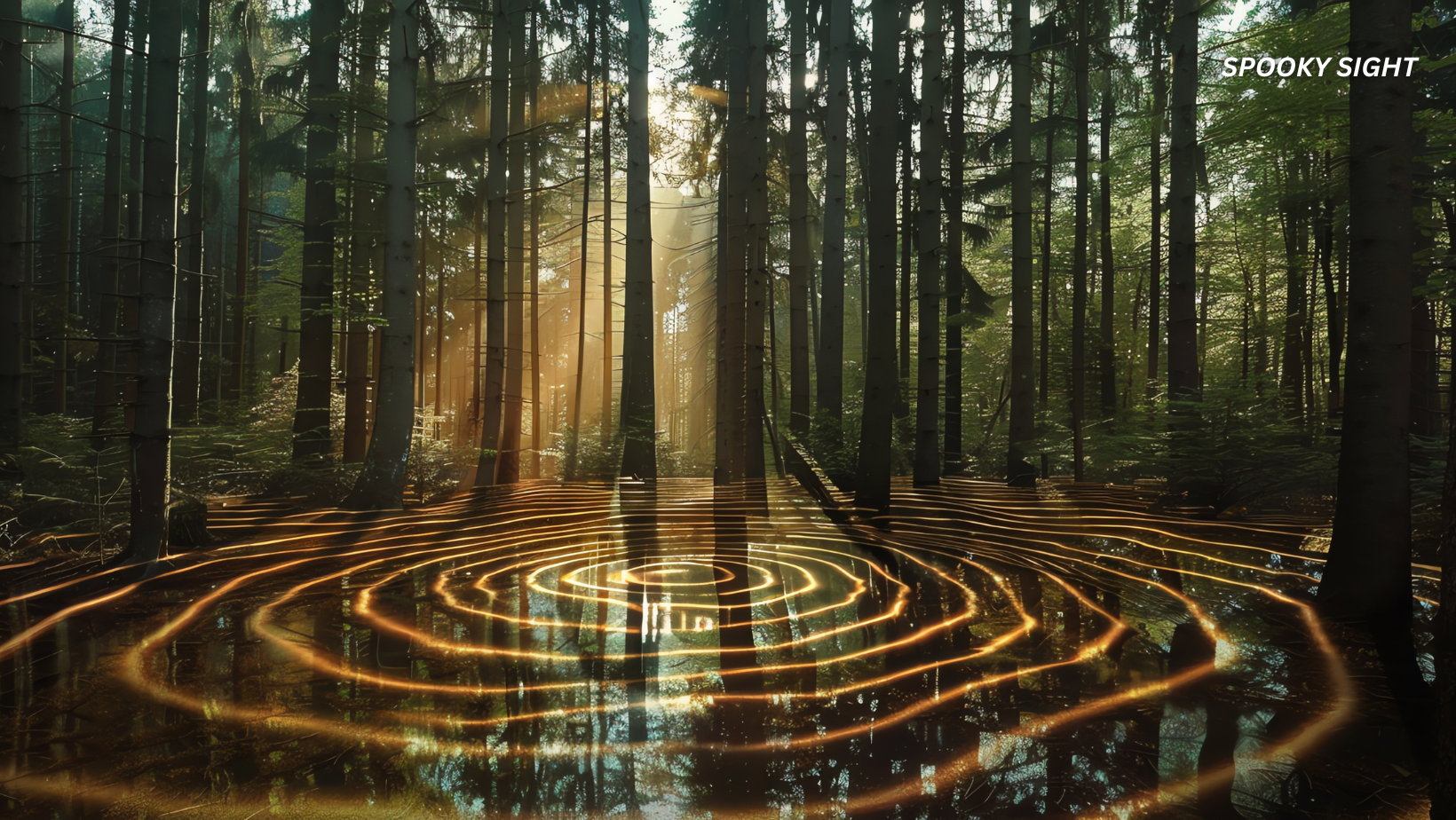
For generations, forests were described in simple, almost mechanical terms. Trees were portrayed as solitary figures rooted in place, each one competing for sunlight, water, and space. Survival, it was believed, depended on outgrowing the neighbor next to you. This interpretation shaped not only scientific understanding but also the way forests were managed, harvested, and even valued.
Yet, as research deepens, that once familiar image has started to feel incomplete.
A growing body of evidence suggests that forests operate less like crowded arenas of competition and more like deeply connected communities. Scientists such as Peter Wohlleben and Suzanne Simard have helped bring this idea into the spotlight. Their work points toward a living system where cooperation, communication, and shared survival play a far greater role than previously imagined.
What appears still and silent from a distance begins to reveal itself as something far more intricate upon closer inspection.
The Hidden Network Beneath the Soil
Beneath the forest floor lies a vast and delicate web that binds trees together. This network is formed by fungi, microscopic organisms that stretch through the soil in long, threadlike filaments. These fungal strands connect to tree roots, creating partnerships that benefit both sides. Trees provide sugars produced through photosynthesis, while fungi help gather water and essential nutrients from the soil.
This relationship forms what many scientists informally call a “wood wide web,” a system that allows trees to exchange resources across distances. Through this underground network, a healthy tree can send carbon rich sugars to a younger or shaded tree that struggles to produce enough energy on its own.
In dense forests, this exchange becomes a lifeline. Seedlings growing in low light conditions can survive because larger trees support them. In some remarkable cases, even ancient stumps, long separated from their leaves and branches, have been found alive. Their continued survival appears to depend on nutrients delivered by nearby trees through this fungal network.
Such discoveries have shifted attention toward the role of large, older trees, often described as “mother trees.” These towering figures act as central hubs within the network. They are connected to many other trees and are capable of distributing resources in ways that stabilize the entire forest. Rather than dominating purely through size, they contribute to a form of ecological balance.
Read more: Harvard Scientist Claims An Ancient Civilization on Mars Was Wiped Out By A Nuclear Attack
A Forest That Shares and Supports
The idea that trees share resources may seem unusual at first, yet it aligns with how ecosystems maintain stability. When conditions become harsh, whether due to drought, disease, or limited sunlight, the ability to redistribute energy can mean the difference between survival and collapse.
Research has shown that trees can even favor their own offspring, sending more nutrients to genetically related saplings. This behavior, while not conscious in a human sense, suggests a level of biological coordination that helps ensure continuity across generations.
At the same time, cooperation does not eliminate competition entirely. Trees still grow toward light, and space remains limited. What has changed is the recognition that competition exists alongside collaboration. Forests thrive not because one tree wins, but because many are able to persist together.
How Trees Send Warnings
Beyond sharing nutrients, trees also respond to danger in ways that resemble communication. When a tree is attacked, whether by insects chewing through leaves or animals feeding on branches, it begins to release chemical signals into the air.
These airborne compounds act as warnings. Nearby trees detect them and adjust their own chemistry in response. Some produce bitter or toxic substances that make their leaves less appealing to herbivores. Others strengthen their internal defenses, preparing for a possible attack.
This process can spread across a forest, creating a chain reaction of readiness. A single damaged tree can, in effect, alert its neighbors and reduce the overall impact of the threat.
Signals are not limited to the air. Underground, roots and fungal networks also play a role in transmitting information. Electrical impulses have been observed moving through plant tissues, hinting at a complex system that scientists are still working to understand.
The Surprising Sounds of Plants
In recent years, an unexpected discovery has added yet another dimension to plant behavior. Studies have found that many plants emit ultrasonic sounds when they are under stress. These sounds occur at frequencies beyond human hearing, yet they can be detected by certain animals.
Plants such as tomatoes and cacti have been observed producing faint popping noises when they experience dehydration or physical damage. While these sounds are subtle, they may carry useful information. Animals like bats, mice, and even insects may be able to detect these signals and respond accordingly.
This finding opens the door to new possibilities. Scientists are exploring ways to use these sound patterns to monitor plant health in agriculture. By listening to crops, it may become possible to identify stress early and respond before visible damage occurs.
What once seemed like silence is beginning to reveal layers of hidden activity.
Read more: Here’s What It Means When You See a Cardinal
Rethinking Intelligence in Nature
The idea that trees communicate can easily lead to comparisons with human behavior. However, most scientists approach this topic with caution. Trees do not think or feel in the way humans do. They do not possess brains or consciousness as it is commonly understood.
Still, their ability to exchange information and respond collectively raises important questions. Some researchers describe this phenomenon as a form of distributed or “swarm” intelligence. In this model, complex behavior emerges from many simple interactions rather than from a single controlling center.
Each tree responds to its environment based on chemical and physical signals. When these responses are linked across a network, the forest begins to act as a coordinated system. It adapts, recovers, and evolves in ways that no single tree could achieve alone.
Why This Changes Forest Conservation
This evolving understanding of forests carries significant implications for how they are protected and managed. Traditional logging practices often treat trees as individual units, removing them without considering the relationships that connect them.
When large trees are cut down, the network they supported can weaken or collapse. Younger trees that relied on those connections may struggle to survive. Soil health can decline as fungal systems are disrupted. Over time, the forest becomes less resilient to environmental stress.
Recognizing forests as interconnected systems encourages a different approach. Conservation efforts increasingly emphasize the importance of preserving older trees, maintaining biodiversity, and minimizing disturbances to the soil.
Selective logging, reforestation with diverse species, and the protection of natural growth patterns are gaining attention as more sustainable strategies. These methods aim to support the forest as a whole rather than focusing on individual trees.
A Living, Breathing System
What emerges from all of this research is a richer and more nuanced view of forests. They are not static landscapes frozen in time. They are dynamic systems filled with exchange, adaptation, and interaction.
Beneath the surface, roots and fungi form intricate pathways. Above ground, leaves release signals into the air. Across the entire ecosystem, energy flows in ways that support both individual trees and the collective whole.
The forest, in essence, becomes a kind of living network. It grows, responds, and endures through a balance of cooperation and competition.

Read more: Scientists Release NASA Rover Photos Showing Possible Insect and Reptile Life Forms on Mars
The Ongoing Story of the Forest
As science continues to explore these connections, new questions are constantly emerging. How far can these networks extend. How do different species interact within the same system. What role do environmental changes play in shaping these relationships.
Each discovery adds another layer to the story.
What once appeared simple now reveals itself as deeply complex. Forests, long admired for their beauty, are now being recognized for their subtle intelligence and resilience. They are places where life is not only sustained but also shared.
In the end, the idea of trees “talking” may not fit neatly into human definitions of communication. Yet the evidence suggests that something meaningful is taking place. Information moves. Responses follow. Connections matter.
And within that slow, intricate exchange, forests continue to thrive, adapting to a world that is always changing while remaining rooted in a network that has existed for far longer than human memory.
Featured image: Freepik.
Friendly Note: Spookysight.com shares general information for curious minds. Please fact-check all claims. 🌱